
September Newsletter: Family History of Glaucoma: When Should Screening Begin?
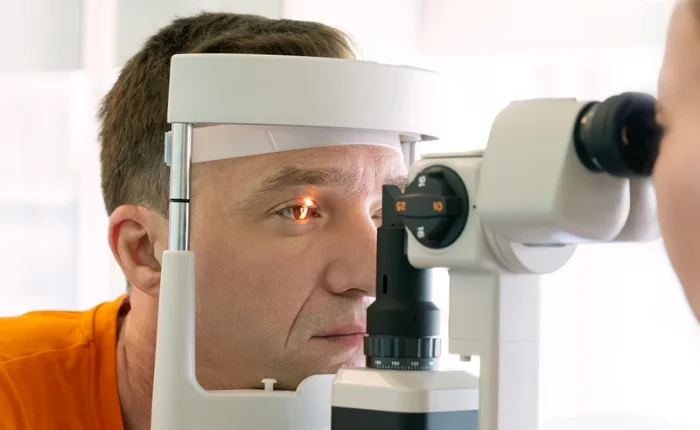
When Should Screenings Begin if You Have a Family History of Glaucoma?
Regular eye exams are particularly important if glaucoma runs in your family. Although a family history doesn't automatically mean that you'll develop this eye disease, it does increase your risk. Early detection is the best way to prevent or minimize vision loss caused by glaucoma.
Why a Family History Matters
Glaucoma causes damage the optic nerve, most commonly through increased intraocular pressure. The optic nerve transmits electrical impulses from the eyes to the brain and is a crucial link in the vision process. Damage to the nerve causes permanent loss of vision. Your glaucoma risk may be higher if a close relative has been diagnosed with the disease.
Types of glaucoma include:
Open-Angle Glaucoma. Open-angle glaucoma happens when the fluid inside your eyes drains too slowly, causing a gradual increase in pressure. Since eye pressure increases slowly, you may not notice any symptoms at first, despite damage being done to your optic nerve.
Angle-Closure Glaucoma. This form of glaucoma occurs when the drainage channels in the eye suddenly become blocked, often by part of your iris. Sudden vision loss, which may look like a dark curtain being drawn over your field of view, is a common sign of closed-angle glaucoma.
Pigmentary Glaucoma. Tiny pieces of pigment in the iris clog the eye's drainage channels in pigmentary glaucoma.
Congenital Glaucoma. This rare type of glaucoma is present when a child is born or may be diagnosed during early childhood.
Although your risk may be higher if you have a relative with glaucoma, your siblings' eye health is a particularly important factor, according to the Glaucoma Research Foundation. Your risk may be 10 times higher if a brother or sister has glaucoma.
When Should Screening First Take Place?
The American Academy of Ophthalmology recommends a baseline screening at age 40 for everyone, as early signs of eye disease, including glaucoma, may first appear at this age. Screening recommendations are a little different if you have a family history of glaucoma.
Your optometrist may recommend yearly screenings beginning in your 20s or 30s, particularly if your relative developed glaucoma during this time. If there is a family history of congenital glaucoma, your optometrist may want to see your child more frequently than usual during early childhood.
What Happens During a Glaucoma Screening?
During your visit, your eye doctor will perform several tests, which may include:
Checking Eye Pressure. Your eye doctor may use a machine that produces a quick puff of air or touch a small instrument to your eyes after numbing them with eye drops. Both methods measure the pressure inside your eye.
Dilating Your Eyes. Special eye drops dilate (widen) your pupils, giving your optometrist a better view of your optic nerve and retina, the light-sensing tissue lining the back of the eye.
Mapping the Optic Nerve. After your eyes are dilated, your eye doctor may take pictures with a special camera that maps the optic nerve. Mapping makes it easier to spot early signs of damage or changes to the nerve.
Testing Your Corneal Thickness. Your eye doctor places a small instrument against your numbed eye to measure the thickness of your cornea, the clear rounded tissue that covers your iris and pupil.
Gonioscopy. This test measures the angle between your cornea and iris and can help your optometrist determine if the angle is too narrow and could cause drainage issues.
Visual Field Test. Your eye doctor may perform a visual field test, which measures how far you can see to the left, right, up and down without moving your eyes while you look straight ahead. This test is particularly important, as open-angle glaucoma can gradually shrink your field of vision, starting with the side vision first.
Based on the exam's results, your eye doctor will discuss how often you should have screenings in the future and offer treatment if you show signs of glaucoma.
Glaucoma screenings protect your vision if you have a family history of the disease. Contact our office to schedule your screening.
Sources:
Glaucoma Research Foundation: Family Inheritance & Genetic Risks, 5/4/2026
https://glaucoma.org/articles/glaucoma-family-inheritance
Cleveland Clinic: Does Glaucoma Run in Families?, 4/28/2025
https://health.clevelandclinic.org/is-glaucoma-hereditary
Ophthalmology Glaucoma: Family Screening in Glaucoma: A Scoping Review, 3/16/2026
https://www.sciencedirect.com/science/article/pii/S2589419626000487
CDC: About Glaucoma, 5/15/2024
https://www.cdc.gov/vision-health/about-eye-disorders/glaucoma.html
American Academy of Ophthalmology: Get an Eye Disease Screening by Age 40, 4/20/2026
https://www.aao.org/eye-health/tips-prevention/screening


- Monday 8:00 am - 5:30 pm
- Tuesday 8:00 am - 5:30 pm
- Wednesday 8:00 am - 5:30 pm
- Thursday 8:00 am - 5:30 pm
- Friday 8:00 am - 5:30 pm
- Saturday By Appointment Only
- Sunday Closed
- Monday 8:30 am - 6:00 pm
- Tuesday 8:30 am - 6:00 pm
- Wednesday 8:30 am - 6:00 pm
- Thursday 8:30 am - 6:00 pm
- Friday 8:30 am - 6:00 pm
- Saturday By Appointment Only
- Sunday Closed
© 2026 Riviera Opticare. All rights Reserved. Accessibility Statement - Privacy Policy - Sitemap
Managed and Designed By
